
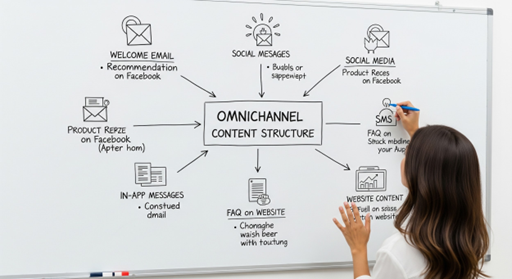
In today’s digital age, delivering a seamless brand experience across multiple platforms is crucial for reaching and engaging customers effectively. Omnichannel marketing is about creating a consistent and unified customer journey, no matter where or how your audience interacts with your brand. Here’s how to structure your content to achieve omnichannel success:
- Understand Your Audience:
- Demographics and Behaviors: Identify who your audience is, including their age, gender, preferences, and purchasing habits. Use analytics tools to gather data and insights.
- Customer Journey Mapping: Chart out the buying process from discovery to purchase and post-purchase. Understand the touchpoints where your audience engages with your brand.
- Consistent Brand Messaging:
- Unified Voice and Tone: Develop a clear brand voice that is recognizable across all platforms. Whether on social media, your website, or in email marketing, your brand’s personality should be consistent.
- Core Messaging Framework: Establish key messages that align with your brand’s values and objectives, ensuring they are adaptable across different channels.

- Integrated Content Strategy:
- Content Calendar: Plan and coordinate your content across all channels using a centralized calendar. This helps maintain consistency and leverage different mediums together.
- Relevance and Adaptability: Tailor your content to suit the platform while maintaining core messaging. For instance, a video may be central to your strategy, with accompanying blog posts, social media snippets, and email campaigns.
- Platform-Specific Optimization:
- Tailored Formats and Features: Utilize the unique features of each platform. Use stories on Instagram, threads on Twitter (or Threads), and newsletters for emails to engage differently but consistently.
- SEO and Enhancements: Optimize for search engines to ensure discoverability. Use appropriate keywords, alt texts, and meta descriptions across web content.
- Leveraging Technology:
- Customer Data Platforms (CDPs): Implement CDPs to gather data and insights across platforms, providing a single customer view.
- Automation Tools: Use automation to deliver personalized experiences at scale, like chatbots or AI-driven content recommendations.
- Monitor and Adapt:
- Analytics and Feedback: Continuously track performance with tools like Google Analytics or social media insights. Understand which content and platforms are driving engagement.
- Iterative Improvement: Be prepared to adjust your strategy based on data insights and feedback. Flexibility is key to maintaining relevance and connection.
Conclusion:
Creating an omnichannel strategy requires a nuanced understanding of your audience and a flexible, yet consistent approach to content creation. By maintaining a unified brand presence and adapting your content strategy to different platforms, you can enhance your brand’s reach and engagement. Ultimately, omnichannel success is about meeting your customers where they are with the right message at the right time. Embrace the tools and insights available, and your brand will thrive across channels.