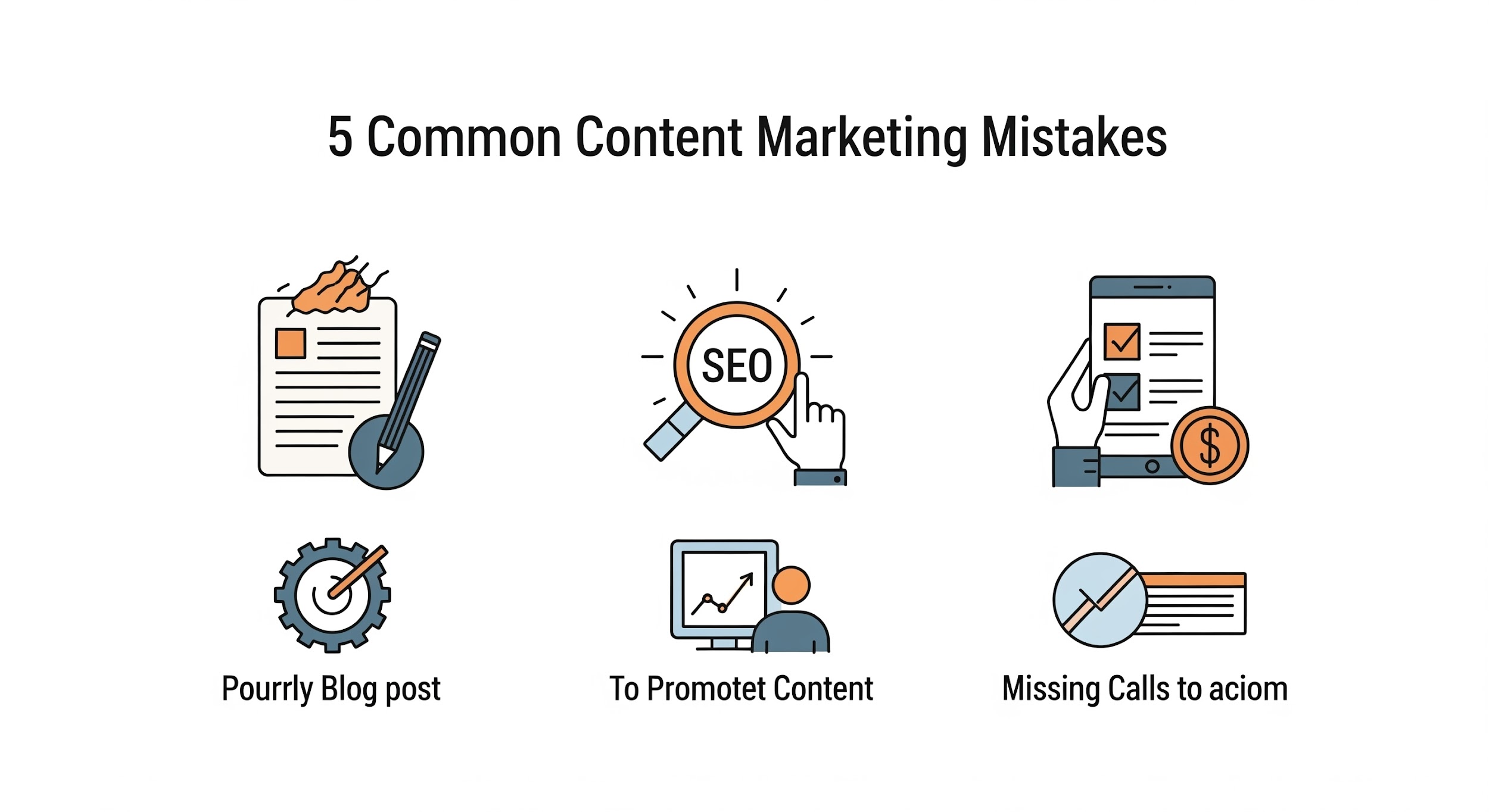
Struggling to get your content noticed? Wondering why your blog posts aren’t driving traffic or sales? Tired of shouting into the digital void?
Content marketing can feel like a game of hide and seek. You put your best efforts out there, but your audience seems to have gone home for tea. At SutchOne Group Ltd, we’ve seen many businesses—auto dealerships, beauty salons, ecommerce stores, and crypto companies—fall into the same traps. The good news? You can sidestep these common content marketing mistakes and finally get your brand the digital exposure it deserves. Let’s look at the top five blunders and how to avoid them, so your content doesn’t end up as lonely as a sock behind the washing machine.
1. Not Knowing Your Audience
Imagine telling a joke about blockchain to your grandmother. Chances are, she’ll smile politely and wonder if you’ve joined a cult. The same thing happens when you create content without knowing your audience.
Many businesses make the mistake of writing for everyone. If you try to please everyone, you’ll end up pleasing no one (except maybe your mum, and she’s not buying your product).
Research your audience. Use analytics tools to find out who visits your site and what they like. Are you talking to tech-savvy millennials or small business owners who still think TikTok is a breath mint?
Create personas. Give your ideal customers names, jobs, and even favourite coffee orders. The more specific you are, the easier it is to craft content that resonates.
Speak their language. Avoid jargon if your audience is new to your industry. Don’t dumb things down if you’re speaking to experts. No one wants to read “SEO for Dummies” if they’ve been optimising since AltaVista was cool.
Example: A financial services company once published a blog post titled “How to Save for Retirement in Your 20s.” Their main audience? People over 50. The result? Crickets. Know your audience, and your content will hit the mark.
2. Ignoring SEO Best Practices
SEO might sound like a secret society, but it’s really just about helping people find your content. Skipping SEO is like opening a bakery in the middle of a forest—sure, the squirrels might be grateful, but your target customers will never find you.
Use relevant keywords. Think about what your audience is searching for. If you run a beauty salon, “best haircuts in London” beats “our salon’s philosophy on follicular artistry.”
Optimise headlines and meta descriptions. These are the first things people see in search results. Make them catchy, clear, and keyword-rich (but not stuffed like a Christmas turkey).
Don’t forget about mobile. Over half of all web traffic comes from mobile devices. If your site isn’t mobile-friendly, you’re waving goodbye to a huge chunk of your audience.
Example: An ecommerce store selling novelty socks wrote hilarious product descriptions but forgot to use keywords like “funny socks UK.” Their traffic was lower than a limbo contest. A few tweaks, and suddenly, their socks were everywhere—on feet and in search results.
3. Creating Content Without a Clear Goal
Content without a purpose is like a GPS with no destination—it’ll take you somewhere, but you probably won’t like where you end up. Every piece of content should have a clear goal: educate, entertain, generate leads, or drive sales.

Define your objective before you start. Are you trying to increase newsletter signups? Drive traffic to your online store? Boost your brand’s authority?
Include a call-to-action (CTA). Don’t assume your readers know what to do next. Guide them—gently, like a sheepdog herding particularly distracted sheep.
Measure results. Use analytics to see what’s working. If your “Ultimate Guide to Car Waxing” is getting more love than your “History of the Windscreen Wiper,” you know where to focus.
Example: A crypto company blogged about the “Top 10 Crypto Memes.” Entertaining, yes. But with no CTA or link to their services, readers left with a smile but no intention to invest. Set a goal, and your content will work harder for you.
4. Overlooking Content Distribution
Great content that no one sees is like a Michelin-star meal served in a broom cupboard. Distribution is key. Don’t just hit “publish” and hope for the best.

Leverage multiple channels. Share your content on social media, email newsletters, and relevant forums. The more places your content appears, the greater your reach.
Syndicate your content. Services like SutchOne Group Ltd can distribute your articles, videos, and infographics to hundreds of media outlets. (Yes, even Bloomberg and Yahoo! News. Your content could be more famous than your neighbour’s cat.)
Encourage sharing. Make it easy for readers to share your content with friends, colleagues, or their dog’s Instagram followers.
Example: An auto dealership wrote a fantastic blog post about electric cars but only posted it on their website. After syndicating it to major outlets, their traffic and leads accelerated faster than a Tesla in ludicrous mode.
5. Failing to Update and Repurpose Content
Content isn’t a one-and-done deal. Leaving your blog untouched for years is like serving leftovers from 2017—it’s not going to impress anyone. Updating and repurposing content keeps it fresh and relevant.
Update old posts. Add new stats, fix broken links, and refresh outdated tips. Google loves fresh content, and so do your readers.
Repurpose into new formats. Turn a popular blog post into a video, infographic, or podcast. You’ll reach new audiences without reinventing the wheel (or the blog post).
Re-share evergreen content. If your “Ultimate Guide to Skincare” is still relevant, don’t be shy—share it again. Just don’t overdo it, or your audience will start to think you’re stuck in a time loop.
Example: A beauty salon noticed their “Top 5 Summer Hairstyles” post was gathering digital dust. They updated it for the current year, created a quick video tutorial, and shared it on Instagram. Engagement soared, and so did bookings. Sometimes, old content just needs a new haircut.
Content marketing doesn’t have to be a mystery. By avoiding these five